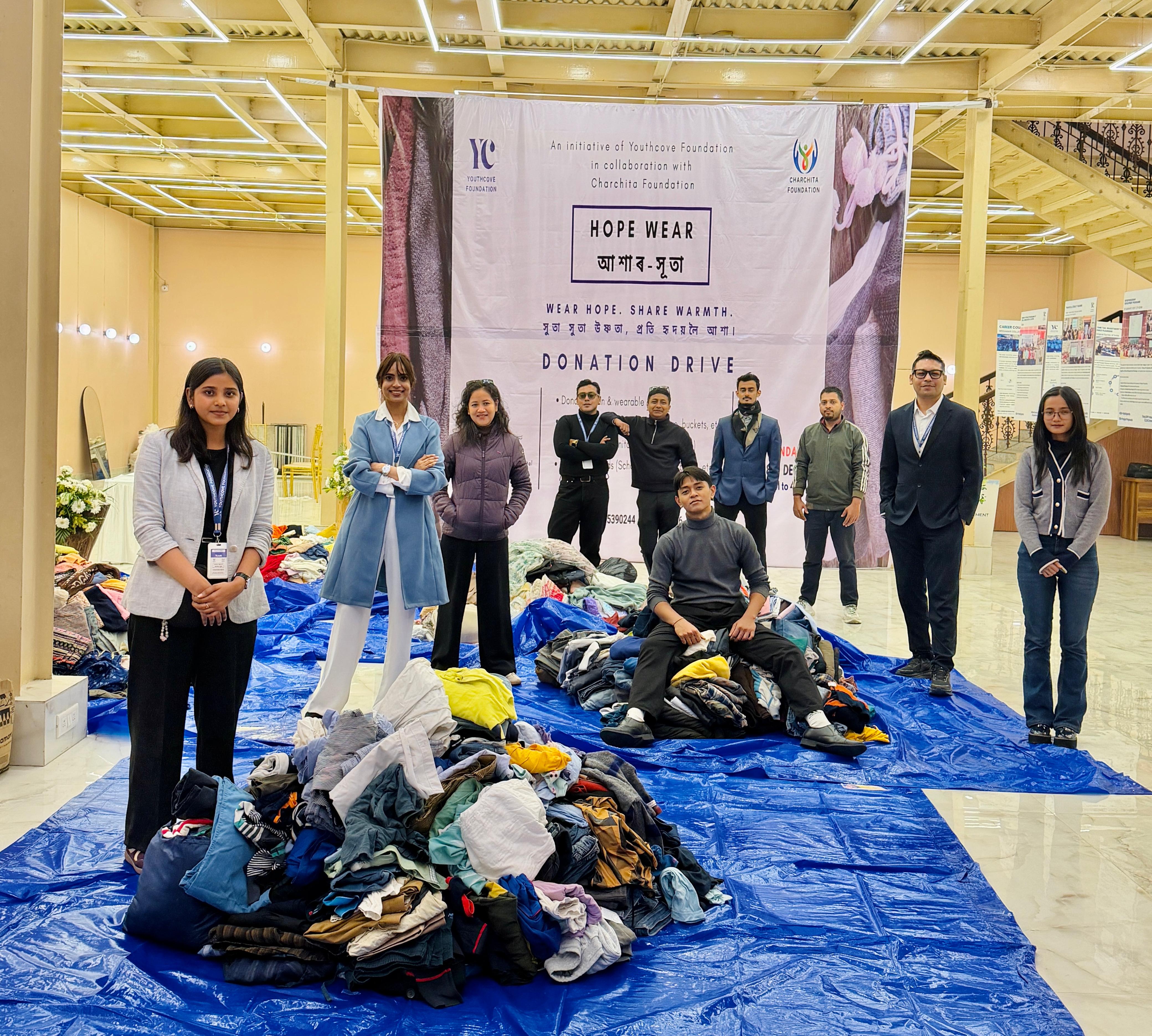
Most founders assume an NGO only exists to collect donations and give things away for free. That's true for some — but a large number of NGOs earn substantial, legitimate revenue from project fees, government contracts, and CSR-funded programme implementation, without ever distributing a rupee of profit to their members. Both are equally valid NGO models. The mistake is picking a structure without being clear on which one you're actually running.
The two working models, side by side
Provides social assistance to beneficiaries directly, generally free or at a highly subsidised cost.
- Food, clothing, essential items
- Medical camps & healthcare centres
- Scholarships & free education
- Rural development, disaster relief
Designs and delivers professional programmes for a fee. Surplus is ploughed back into future projects — never distributed as profit.
- Surveys & socioeconomic research
- Government / CSR project implementation
- Skill-training & incubation programmes
- Digital aggregator platforms (farmers, artisans)
Your situation: both models under one plan
This is exactly the pattern we see with founder groups building a serious social-impact organisation: one arm for pure charitable welfare (donations, medical help, healthcare, education, rural development — eligible for 12A, 80G, CSR-1), and a second arm for paid government and CSR project implementation (surveys, aggregator platforms, training, programme management, incubation). Both are legitimate NGO activity. What changes is how each arm is structured, funded, and registered.
Arm 1 — Welfare Entity
Donations, medical help, healthcare, education, rural development. Pursues 12A/12AB, 80G, CSR-1.
Arm 2 — Implementation Entity
Surveys, aggregator platforms, training, programme implementation, incubation. Runs on project fees and contracts.
Why 12A, 80G and CSR-1 aren't interchangeable
These three registrations solve three separate problems — and none of them is automatic just because an entity is registered as a Trust, Society, or Section 8 Company:
12A / 12AB
Protects the NGO's own income from tax, as long as it's spent on charitable objects.
80G
Lets the donor claim a deduction — often the single biggest reason a donor picks one NGO over another.
CSR-1
The gate that must be open before a company's CSR budget can legally reach the NGO at all.
Entity options within the charitable model
| Structure | Governing law | Best suited for |
|---|---|---|
| Trust | Indian Trusts Act, 1882 (or state Public Trust Acts) | Simple governance — family or founder-led charitable initiatives |
| Society | Societies Registration Act, 1860 | Membership-based organisations, community and educational institutions |
| Section 8 Company | Companies Act, 2013 | Corporate-style governance — higher credibility with institutional donors, CSR partners, and government tendering |
The main difference, at a glance
| Particulars | Welfare-Based NGO | Project-Based NGO |
|---|---|---|
| Primary approach | Direct charitable assistance | Professional programme implementation |
| Main beneficiaries | Individuals and communities | Individuals, communities, institutions and development agencies |
| Major funding | Donations, grants and CSR funds | Project fees, grants, training fees and implementation charges |
| Nature of work | Relief and welfare-oriented | Research, training, technology, incubation and execution-oriented |
| Revenue generation | Usually limited | May generate substantial operational revenue |
| Treatment of surplus | Reinvested in charitable activities | Reinvested in the organisation's projects and objectives |
| Profit distribution | Not permitted | Not permitted |
| Professional team | Volunteers and employees | Employees, trainers, consultants, researchers and project professionals |
Getting the sequence right (welfare-entity registrations)
For the arm pursuing donations and CSR funding, registrations aren't a checklist you can do in any order — each is a precondition for the next.
Entity registration
Trust deed, Society registration, or Section 8 incorporation.
PAN & bank account
In the entity's own name.
12A / 12AB
First tax registration — establishes exempt status.
80G registration
Usually filed alongside or soon after 12A.
CSR-1
Once a minimum track record exists.
FCRA (if needed)
Separate, stricter — only for foreign contributions.
The compliance that follows either way
Whichever arm you're running, some obligations apply regardless of model:
Annual financial statements
Prepared every year, regardless of entity type or scale.
Statutory audit
Triggered once income crosses the applicable threshold.
Income tax return — Form ITR-7
Filed by entities claiming exemption under the charitable regime.
12A / 80G renewal filings
Now periodic and deadline-driven — missing a renewal window can lapse the exemption entirely, which is a costlier fix than the original registration itself.